Bathroom Electrical Zones Explained: Zone 0, 1 and 2 (UK)
Zone 0 is inside the bath, Zone 1 rises 2.25m above it, Zone 2 runs 0.6m beyond. IPX7, IPX4 and 30mA RCD rules, and what Part P makes notifiable.
A bathroom is the one room where water and electricity share the same small space, which is why it has its own zone system. Knowing the zones is not just for electricians: it is how you check that a bathroom quote is putting the right fittings in the right places, and that the work will actually be certified. Here is what each zone means and what your quote must cover.
The zones
Bathrooms are divided into zones by how likely water is to reach electrics. Zone 0 is inside the bath or shower tray itself. Zone 1 is the area directly above, up to 2.25 metres from the floor, or up to the shower head where it is fitted higher than that. Zone 2 extends 0.6 metres horizontally beyond Zone 1, and the area around a washbasin tap. Where a shower has no tray, Part P measures the space 1.2 metres from the centre of the shower head instead of 0.6 metres from a tray edge. Each zone sets a minimum ingress-protection (IP) rating for any fitting installed there. Outside the zones, normal fittings are allowed, but the whole bathroom circuit must still be protected by a 30mA RCD.
Those Part P dimensions are not guidance, they are in the Building Regulations 2010 themselves. Regulation 12(9) defines a "special location" as the space around a bath tap or shower head, running from finished floor level up to 2.25 metres (or to the shower head where it is fixed higher), and horizontally 0.6 metres from the edge of a bath or tray, or 1.2 metres from the centre of the shower head where there is neither. The same definition also catches a room containing a swimming pool or a sauna heater, which is worth knowing if a bathroom project includes a home sauna: that room is a special location in its own right.
| Zone | Where | Minimum protection |
|---|---|---|
| Zone 0 | Inside the bath or shower tray | IPX7, SELV (extra-low voltage) only |
| Zone 1 | Above the bath or shower, up to 2.25m | IPX4 (IPX5 if water jets used to clean) |
| Zone 2 | 0.6m beyond Zone 1, and around the basin | IPX4 |
| Outside zones | The rest of the room | No IP requirement, but RCD protected |
What can go where
- Inside the bath or shower (Zone 0): only SELV extra-low voltage, fully waterproof fittings (IPX7). Mains voltage equipment is not permitted here, and almost nothing goes in this zone.
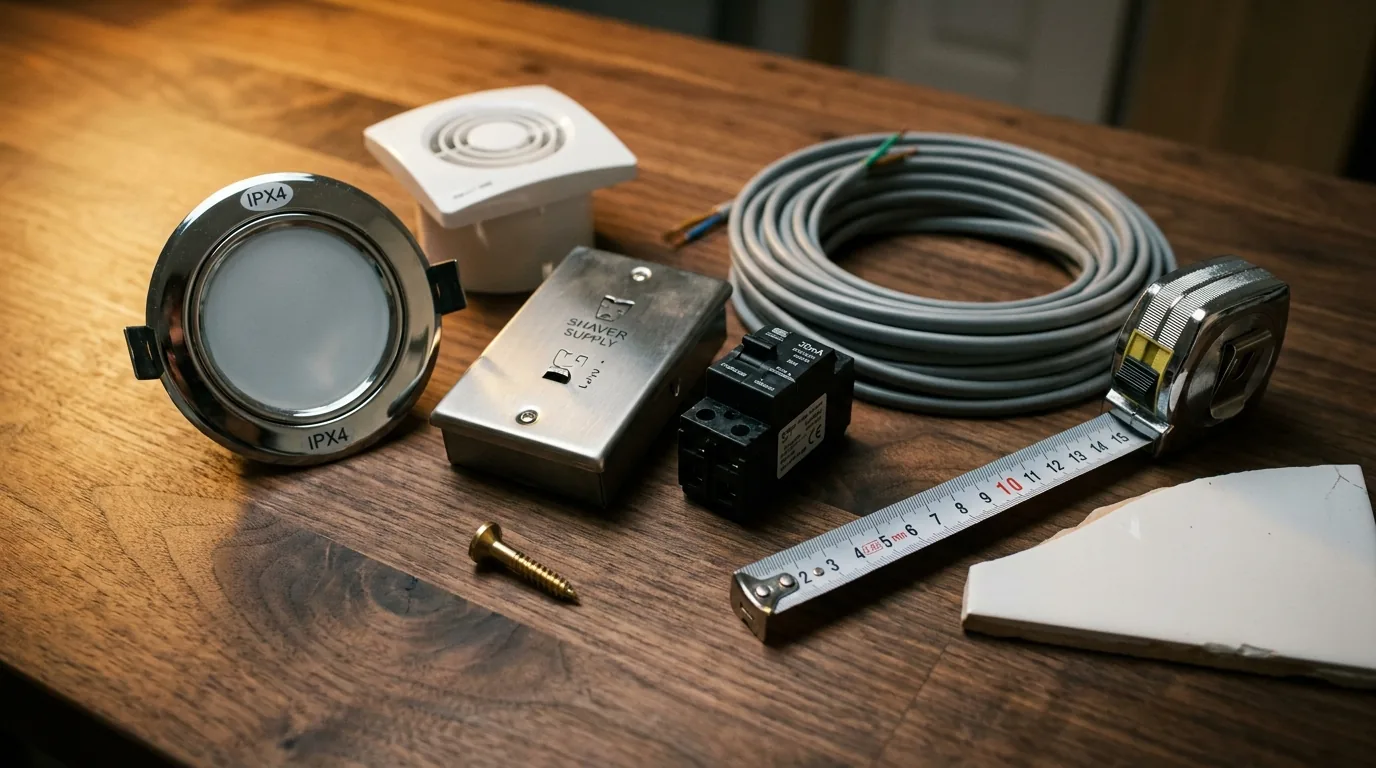
- Above the bath/shower (Zone 1): downlights and extractor fans rated at least IPX4. A correctly rated shower or electric shower unit.
- Beyond, to 0.6m (Zone 2): IPX4 lights and a shaver supply unit. No standard sockets.
- Outside the zones: normal fittings, but a standard 13A socket is only allowed if it is at least 3 metres from Zone 1, which excludes most UK bathrooms.
The headline most people need: you cannot put an ordinary socket in a normal-sized bathroom, and every light and fan above or near the bath or shower needs to be the right IP rating.
RCD protection and Part P
Two non-negotiables sit behind the zones.
Every circuit serving a bathroom must be protected by a 30mA RCD, which cuts the power fast enough to prevent a fatal shock. And in England, Part P makes electrical work notifiable when it is a new circuit, a consumer unit replacement, or an addition or alteration to an existing circuit inside the special location around the bath or shower. Most bathroom refits involve at least one of those. Notifiable work must be self-certified by a registered competent person, certified by a registered third-party certifier, or notified to Building Control before it starts, with a BS 7671 certificate and a Building Regulations compliance certificate issued at the end. Wales, Scotland and Northern Ireland have their own arrangements. A bathroom quote that adds lighting, a fan, or an electric shower but says nothing about certification has left out the part that proves it is safe and legal.
What this means for your bathroom quote
When you read a bathroom quote, the electrics are easy to gloss over but important to get right. Check it:
- Specifies IP-rated fittings for the lights and extractor fan
- Includes a registered competent person, a registered third-party certifier, or Building Control sign-off
- Mentions RCD protection
- Includes the electrical certificate at the end
- Does not promise a standard socket somewhere it is not allowed
Our bathroom fitter quote checklist covers the rest of the job, and how to check electrics covers the wider electrical picture. If the whole house is being rewired, see house rewiring costs.
Check your bathroom quote
A bathroom mixes trades, and the electrics are where compliance quietly goes missing. Upload your quote and we check whether the electrical work is specified and certified correctly, and flag it when the IP ratings, the RCD, or the Part P certification have been left out. It takes under a minute.
Got a bathroom quote? Check the electrics are compliant
See how your costs compare to thousands of real UK quotes.
Get my estimateWas this useful?